Your company is growing. Revenue is increasing. Customers are happy. Everything looks good.
Then a potential client asks:
“Can you share your ESG performance and sustainability practices?”
You search through your files.
No consolidated ESG data.
No clear carbon footprint report.
No structured ESG framework.
No defined ownership.
Suddenly, a company that looked completely prepared isn’t.
This is why ESG — Environmental, Social, and Governance — is becoming an important part of modern business strategy.
ESG is no longer just about sustainability reports. It is about how organizations manage risks, treat people, operate responsibly, and prepare for changing stakeholder and regulatory expectations.
What Is ESG?
ESG focuses on three key areas:
🌱 Environmental
How does your business impact the environment?
This can include:
- Energy consumption
- Carbon emissions
- Waste management
- Water usage
- Resource efficiency
- Climate-related risks
👥 Social
How does your organization impact people?
This includes:
- Employee health and safety
- Diversity and inclusion
- Human rights
- Employee development
- Working conditions
- Responsible supply chains
🏛️ Governance
How responsibly is your organization managed?
This can include:
- Business ethics
- Risk management
- Compliance
- Accountability
- Corporate policies
- Transparency
Together, these pillars help organizations identify risks and opportunities that can influence business performance, reputation, stakeholder trust, and long-term growth.
Why Is ESG Important for Businesses?
1. Customers Are Asking More Questions
Imagine your company is bidding for a major international client.
During vendor evaluation, the client asks about your:
- Environmental policies
- Carbon footprint
- Employee practices
- Sustainability initiatives
- Business ethics
- ESG performance
If you cannot provide reliable information, the problem may not be that you are doing nothing.
The problem is that you cannot demonstrate what you are doing.
A structured ESG framework helps organizations collect, manage, and communicate relevant information more effectively.
2. ESG Can Help Identify Business Risks
ESG issues can become business issues.
For example:
High energy consumption → higher operating costs
Poor employee practices → higher employee turnover
Weak governance → compliance and reputational risks
Unmanaged supplier risks → operational disruption
By identifying these risks early, businesses can develop appropriate policies, controls, KPIs, and improvement plans.
3. Regulatory Expectations Are Evolving
ESG reporting requirements are becoming increasingly important across global markets.
In India, SEBI introduced the Business Responsibility and Sustainability Report (BRSR) framework, with ESG disclosures becoming mandatory for the top 1,000 listed entities from FY 2022–23. SEBI has also introduced BRSR Core requirements and a phased approach to assurance.
This means organizations should think beyond:
“Do we have an ESG report?”
Instead, ask:
“Can we demonstrate that our ESG data is reliable, documented, and properly governed?”
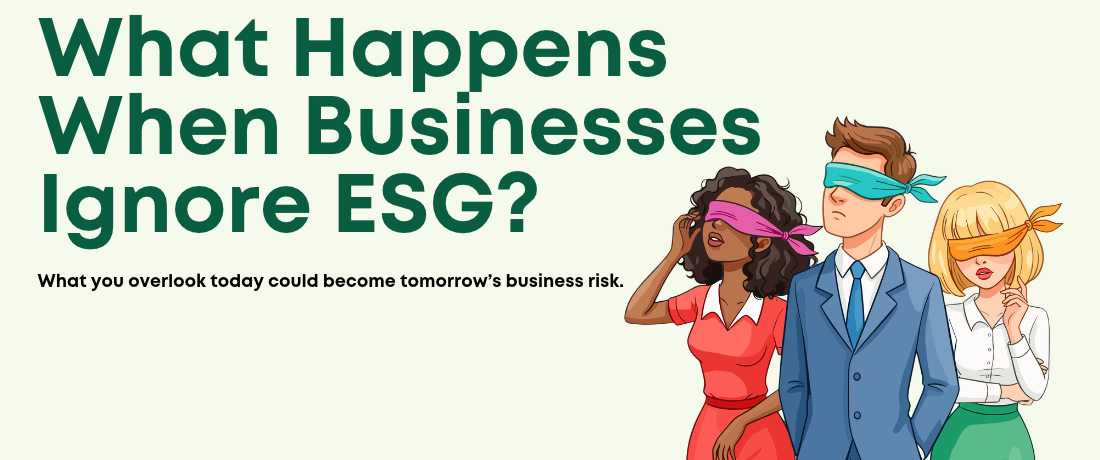
What Can Happen If ESG Is Ignored?
ESG gaps may not create an immediate problem. They often become visible when an organization faces:
- Customer or supplier assessments
- ESG due diligence
- Regulatory reporting
- Investor expectations
- Sustainability questionnaires
- Requests for environmental data
- Increased stakeholder scrutiny
For example, a company may claim to follow sustainable practices but struggle to provide supporting data.
The issue then becomes:
“Can we prove our ESG claims?”
Effective ESG management therefore requires more than statements. It requires policies, measurable data, accountability, documentation, and continuous improvement.
How Can Businesses Build an ESG Framework?
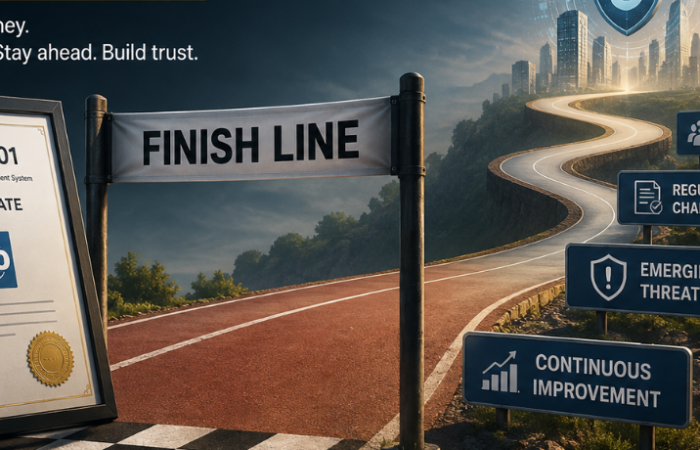
A practical ESG journey can follow five steps:
1. Assess
Understand your current ESG maturity, risks, policies, and gaps.
2. Identify
Determine the ESG issues most relevant to your business and stakeholders.
3. Implement
Establish policies, responsibilities, controls, and KPIs.
4. Measure & Report
Collect, validate, monitor, and document ESG information.
5. Improve
Continuously review performance and strengthen the framework.
Assess → Identify → Implement → Measure → Improve
Where Does CUNIX Come In?
Building an effective ESG framework can be challenging when organizations don’t know where to start or how to connect ESG with existing business processes.
This is where CUNIX ESG Compliance Services can help.
CUNIX supports organizations across areas such as:
ESG Compliance: Strengthening ESG policies, processes, controls, and compliance practices.
ESG Advisory: Helping organizations understand ESG requirements and develop suitable strategies.
Sustainability Consulting: Supporting sustainability objectives, performance measurement, and improvement initiatives.
BRSR Support: Helping organizations address applicable Business Responsibility and Sustainability Reporting requirements.
Carbon Footprint & Climate Support: Supporting relevant environmental and carbon-related requirements.
The objective isn’t simply to create an ESG report.
It is to help organizations build a structured ESG approach that becomes part of how they manage their business.
Is Your Organization ESG-Ready?
ESG is more than a compliance exercise. It can help businesses identify risks, improve transparency, respond to customer expectations, strengthen governance, and prepare for a changing business environment.
Don’t wait until a customer, investor, or regulator asks for your ESG information.
Assess your ESG gaps. Build the right framework. Measure what matters. Improve continuously.
Explore CUNIX ESG Compliance Services to learn how CUNIX can support your organization’s ESG journey.